
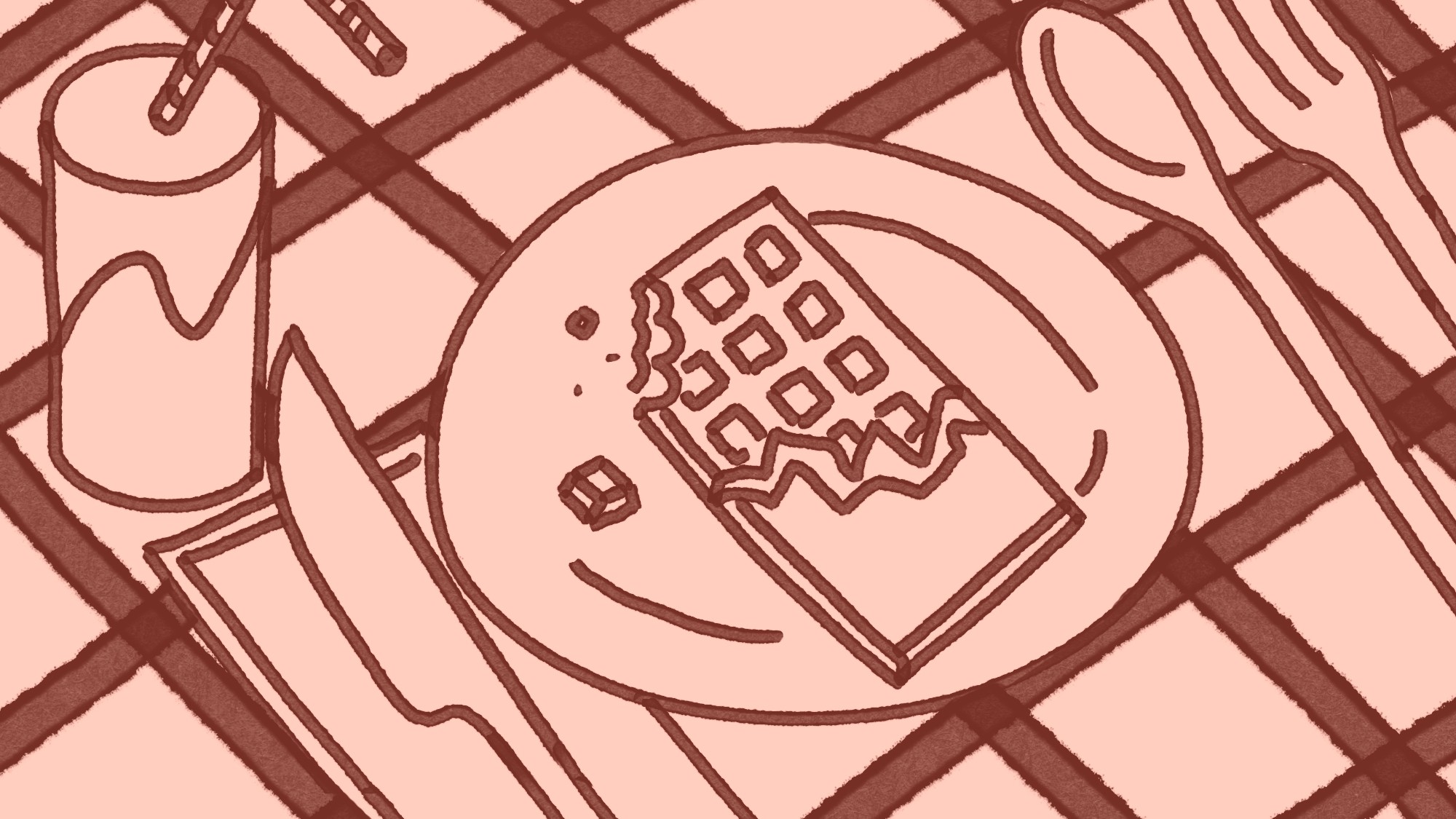
The eating habits of American adults have, in recent years, begun to resemble those of hobbits. Maybe you, too, have scarfed down scrambled eggs at home in the morning, only to arrive at the office and supplement them with a protein bar for second breakfast and a bag of chips for elevenses. The late-afternoon pastry and banana-bread mocha latte have proliferated—and for humans, at least, may become an existential threat to dinner.
Blame the coronavirus pandemic; blame Ozempic; blame inflation. Whatever the cause, intermediary bites and sips make up a growing portion of Americans’ daily consumption, especially among young people, as my colleague Ellen Cushing wrote in 2024. The shift has now become so pronounced that restaurants are adapting to it. Chains that primarily offer meals are rolling out smaller and cheaper options—solid and liquid alike—in the hope of capturing customers who just want a snack. And in the past two years, the nation’s fastest-growing restaurant brands have been those specifically oriented toward that audience.
The restaurant industry subscribes to an extremely broad definition of snacking. Any item consumed outside the traditional breakfast, lunch, and dinner “dayparts”—industry lingo for eating occasions throughout the day—can be considered a snack, David Henkes, a food-and-beverage analyst at the food-industry research firm Technomic, told me. That includes beverages, as long as they’re purchased at a restaurant during off-meal hours; both a high-protein espresso smoothie and a black coffee count. In this view, the most important characteristic of a snack is not content or form but versatility, David Portalatin, a food-service-industry expert at the research firm Circana, told me. In fact, he said, one of the biggest drivers of the snacking trend is consumers’ demand for flexibility.
In the past few years, snacks—especially sweet ones—have powered immense growth among quick-service restaurants, a category that includes stalwarts such as McDonald’s as well as more recent arrivals such as the China-based Luckin Coffee. According to preliminary estimates from Technomic, the top-10 fastest-growing brands in the United States last year were cafés or dessert shops. Most are known for specialty drinks. The fastest-growing chain of 2025 was 7 Brew, which specializes in ultra-customizable sugary drinks such as the Cookie Butter (a creamy espresso concoction flavored with toasted marshmallow, hazelnut, and white chocolate) and the Pink Mermaid 7 Fizz Soda (a bubbly drink with notes of strawberry, watermelon, and coconut). Last year, the company opened 280 new stores, and Technomic projects that it made more than $900 million in sales. Second on the list was Swig, which sells soft drinks flavored with creams and syrups—popularly known as “dirty sodas”—followed by HTeaO, a Southern-style-iced-tea chain. The drinks sold at these chains are descendants of the Frappuccino, one of the earliest chain-restaurant products to blur the line between beverage and snack. Yet even as Starbucks attempts to refocus on coffee by moving away from desserts masquerading as drinks, newer chains are making no pretenses about selling beverages that can easily tide someone over through a mealtime or two.
[Read: How snacks took over American life]
Some brands have realized that snack time can call for a beverage and food. Last year, Dutch Bros Coffee, best known for its saccharine, candy-colored beverages, began rolling out small, hot breakfast items—egg sliders, a single waffle—across its stores to supplement its existing snack menu. The South Korea–based companies Paris Baguette and Tous les Jours, which were also among the top-10 fastest-growing brands of last year, serve baked goods and desserts in addition to coffee- and tea-based drinks. Tous les Jours’ snacks are geared toward younger customers “who are replacing traditional meals with smaller, more intentional indulgences,” Regina Schneider, the company’s chief marketing officer, told me.
Well-established restaurant chains best known for selling full meals are getting into the snack game too. A common strategy is offering smaller versions of typically sandwiched items in the form of a wrap. Last year, McDonald’s reintroduced the chicken Snack Wrap, a palm-size crispy chicken strip enveloped in a tortilla. (It was discontinued from menus in 2016 because it was a nightmare to assemble quickly, but McDonald’s says that it has streamlined the process.) Similarly diminutive and affordable chicken wraps rolled out at Sonic and Popeyes. Chipotle’s interim chief marketing officer, Stephanie Perdue, told me that the company is catering to demand for protein-laden options “across more occasions, especially snack-sized portions at accessible prices.” Accordingly, in December, Chipotle introduced a chicken taco and what the company described as its first-ever snack: the High Protein Cup, a four-ounce container of chopped chicken or steak. The items cost less than $4 each. Even sit-down restaurants are expanding their appetizer and side-dish offerings; earlier this year, TGI Fridays introduced new sampler platters, which were designed to give “guests a snackable option that fits any daypart,” Lauren Perez, the company’s senior vice president of global marketing, told me. Some TGI Fridays locations are even testing a kids’ menu for all ages, she said.
The snackification of restaurants, as one might call it, is partly a response to Americans’ desire for lower-calorie options. GLP-1 use, weight-loss attempts, and the popularity of lean protein are driving that demand, Portalatin said. Circana data show that 35 percent of restaurant-goers say that they’re ordering smaller portions than they have in the past, and roughly 75 percent of that group say that they’re doing so for health reasons. Some restaurants offer not only smaller items but also foods that evoke wellness. Marketing for Chipotle’s High Protein Cup, for example, touts the 32 grams of protein it contains. In January, Dunkin’ added Protein Milk drinks to its menu; they can include caffeine, B vitamins, and more than 15 grams of protein.
[Read: America has entered late-stage protein]
As American work habits become decoupled from traditional mealtimes, people want to eat in a way that’s convenient for that new paradigm, Portalatin said. Busy workdays and, especially among younger generations, guilt about taking breaks lead half of American employees to skip lunch at least once a week, according to a recent survey. “People all across the country are looking up from their desks at 2 in the afternoon and going, Oh, I didn’t have lunch, but I need something,” Portalatin said. Plus, thanks to the pandemic, a significant chunk of American employees are working from home, which means they have fewer organic opportunities to eat meals outside the house. These workers are part of the reason that the share of lunches purchased at a restaurant—the most lucrative daypart in the business—is 5 percent lower than it was in 2019, Portalatin said. Yet remote workers haven’t given up on restaurants altogether; they’re just visiting off-hours. “If you work at home, you’re like, Well, I’ve got to get out once in a while,” Sam Oches, the editor in chief of Nation’s Restaurant News, a trade publication, told me. A jaunt outside for a change of scenery between meetings may not offer enough time for a sit-down meal, but it presents a natural opportunity to pick up a snack—a little reward, perhaps, after a productive stretch. The popularity of drive-through chains such as 7 Brew and Swig reflect that shift in behavior, Oches said.
That little reward is crucial to understanding why snackification endures. As the cost of living has increased because of inflation, people are spending less at restaurants. Yet they’re loath to give them up altogether. When people decide to eat out, they consider not just the cost but also “the quality, the convenience, and the craveable indulgence that I can’t get for myself at home,” Portalatin said. These factors strongly shape appetite, even when finances are an issue. “At the end of the day, Americans love restaurants,” Oches said. And a $3 Snack Wrap gets you just as much of the McDonald’s experience as a combo meal that can cost $10 or more.
[Read: The worst sandwich is back]
Restaurants going all in on snacking is more than just a trend. It’s a major step in codifying America’s upended eating patterns. Restaurants will never entirely abandon breakfast, lunch, and dinner, experts told me, but for the foreseeable future, they’ll likely continue introducing items that people can eat whenever and wherever they need to. In that regard, the rise of snacking is anything but hobbit-like: The abundant mealtimes of Bilbo and his kin were occasions to take a break from the daily grind and savor the pleasure of eating. Ours allow us to keep eating as the wheel turns.
