
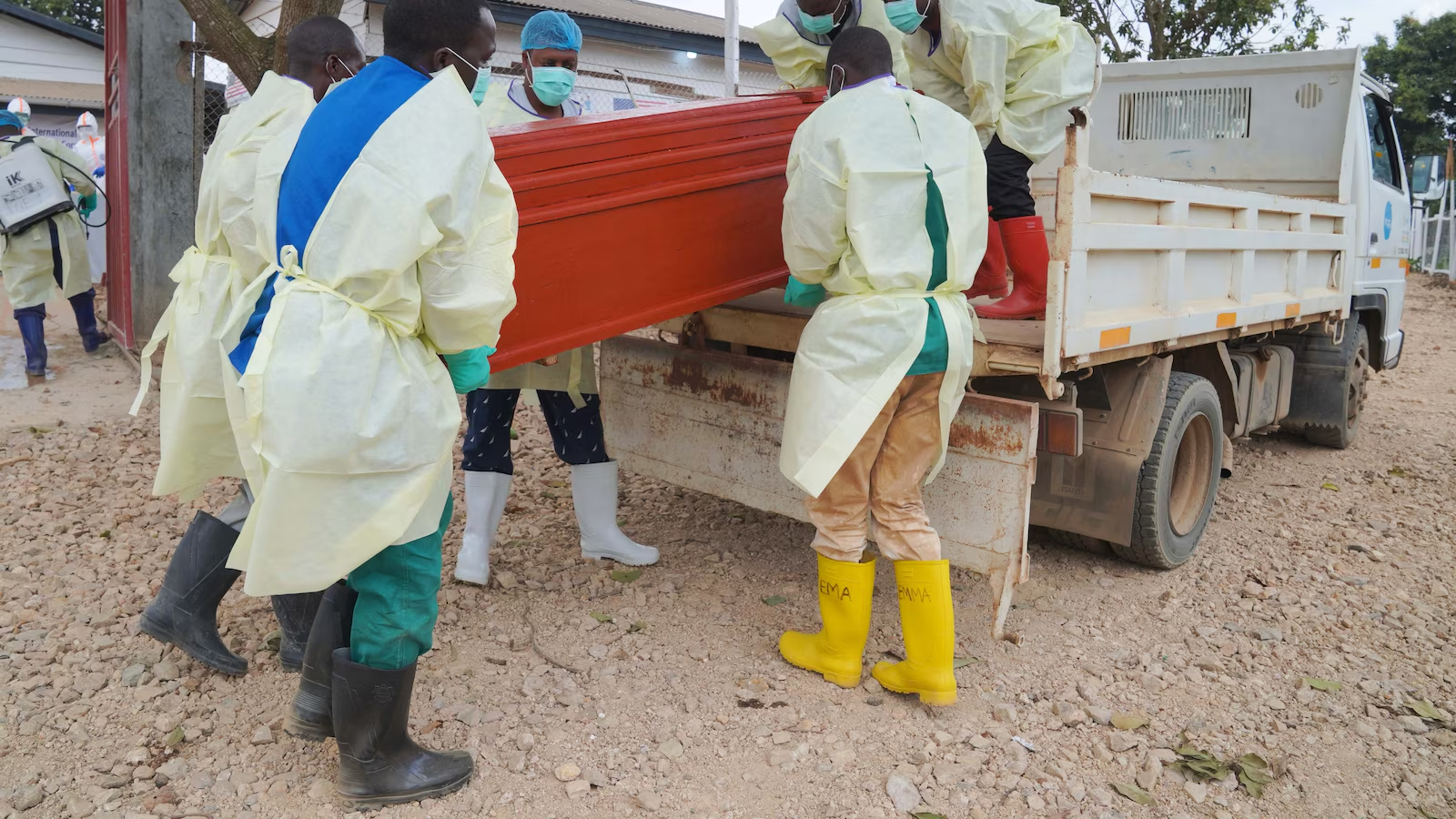
Authorities in the Democratic Republic of Congo launched a critical vaccination campaign on Saturday for healthcare professionals in Bunia, the heart of what is currently the fastest growing Ebola outbreak in history. Major General Gaby Kasongo Mulumba, the military governor of Ituri province, emphasized that frontline responders are being prioritized because they face the highest risk of exposure while managing the crisis. This initiative aims to protect roughly 20,000 workers across Ituri and North Kivu over several months, focusing specifically on the hardest hit zones of Bunia and Mongbwalu.
The effort involves the distribution of the Ervebo vaccine, though its application comes with significant scientific caveats. While Ervebo is licensed and proven effective against the Zaire strain of Ebola, the current outbreak is driven by the Bundibugyo virus, which lacks a dedicated license or treatment. Because these two strains are biologically related, health officials are deploying the vaccine under a compassionate use program. A portion of the available doses will also be utilized in clinical trials to determine if there is any cross protection offered against this specific variant.
Medical personnel on the ground expressed a sense of necessity regarding the shots despite some uncertainty about their efficacy against this new strain. Some doctors noted that since their roles make them indispensable to the response, receiving the vaccine feels mandatory regardless of previous immunizations. These practitioners are operating under grueling conditions characterized by regional insecurity, mass population displacements and recent strikes within the healthcare sector, all of which have hindered containment efforts.
The scale of this tragedy is staggering, with official records showing over 7,500 confirmed cases and more than 3,600 deaths. The World Health Organization has warned that if left uncontrolled, this surge could surpass the devastating West Africa outbreak from 2014 through 2016. With thousands still fighting for survival and no specialized cure for Bundibugyo yet available, protecting those providing care has become a desperate priority to keep the fragile health system from collapsing entirely.
