
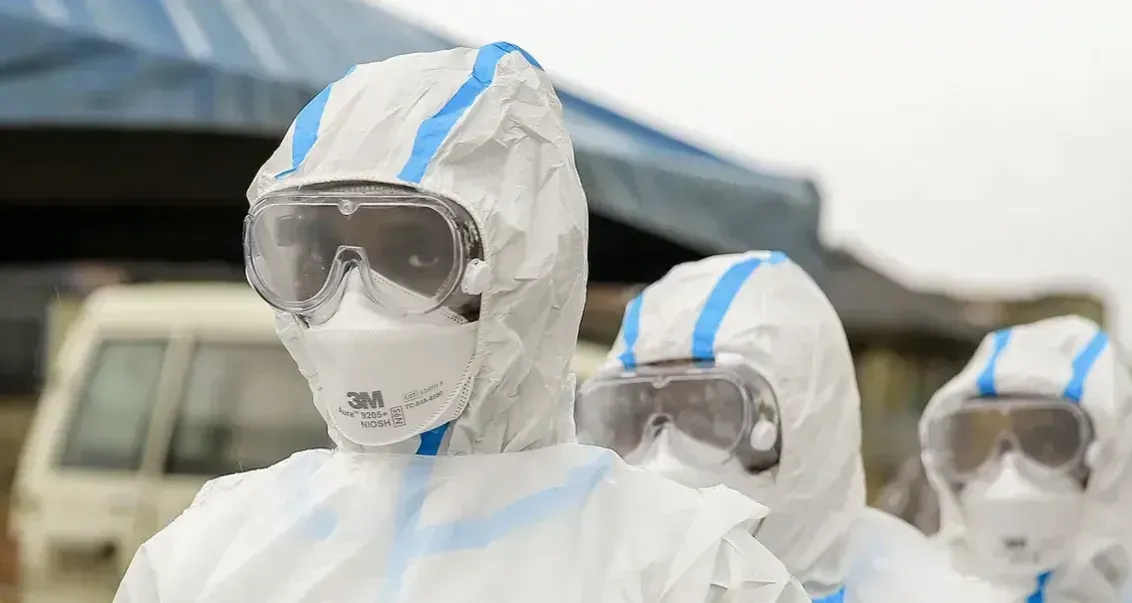
Health officials in the Democratic Republic of the Congo are struggling to keep pace with what has become the deadliest Ebola outbreak in the nation’s history. The crisis took another turn for the worse on Sunday as authorities confirmed the virus has now entered its eighth province, Nord-Ubangi. Two young men in their twenties were identified as cases in the Wapinda health zone, and one has already died. This expansion highlights a worrying trend noted by World Health Organization Regional Director for Africa Mohamed Yakub Janabi, who observed that while certain hotspots may be seeing a decline, the disease is continuing to migrate geographically across the region.
Since mid-May, the outbreak has claimed over 4,500 lives out of roughly 9,400 recorded cases. Unlike previous outbreaks, this surge is driven by the rare Bundibugyo virus, which currently lacks an approved vaccine or specific medical treatment. While Ituri province remains the primary epicenter, accounting for nearly three quarters of all infections, the virus has also crossed international borders into Kenya and Uganda. In an attempt to halt further transmission, North Kivu province is implementing strict movement restrictions, including bans on large public gatherings and limits on how many passengers can travel in cars or on motorcycles.
Containment efforts are being severely hindered by a combination of poor infrastructure and deep seated mistrust within local communities. Epidemiologists report that fear often prevents infected individuals from seeking help at hospitals, leading to many undetected deaths at home. To counter this, health workers in regions like Haut-Uele have shifted toward conducting periodic home visits rather than waiting for patients to arrive at clinics. These teams face uphill battles against rebel violence and mass migrations near mining districts, where constant population movement creates ideal conditions for the virus to jump from person to person.
Local coordinators emphasize that success depends entirely on community cooperation. Serge Ngalebato, a field coordinator in Wamba, noted that initial resistance from residents eventually gave way to better reporting once trust was established through outreach. However, with poor roads and failing communication networks complicating logistics throughout northern Congo, health officials warn that without widespread civic engagement and improved access to remote areas, the window to stabilize this unprecedented biological crisis continues to shrink.
