
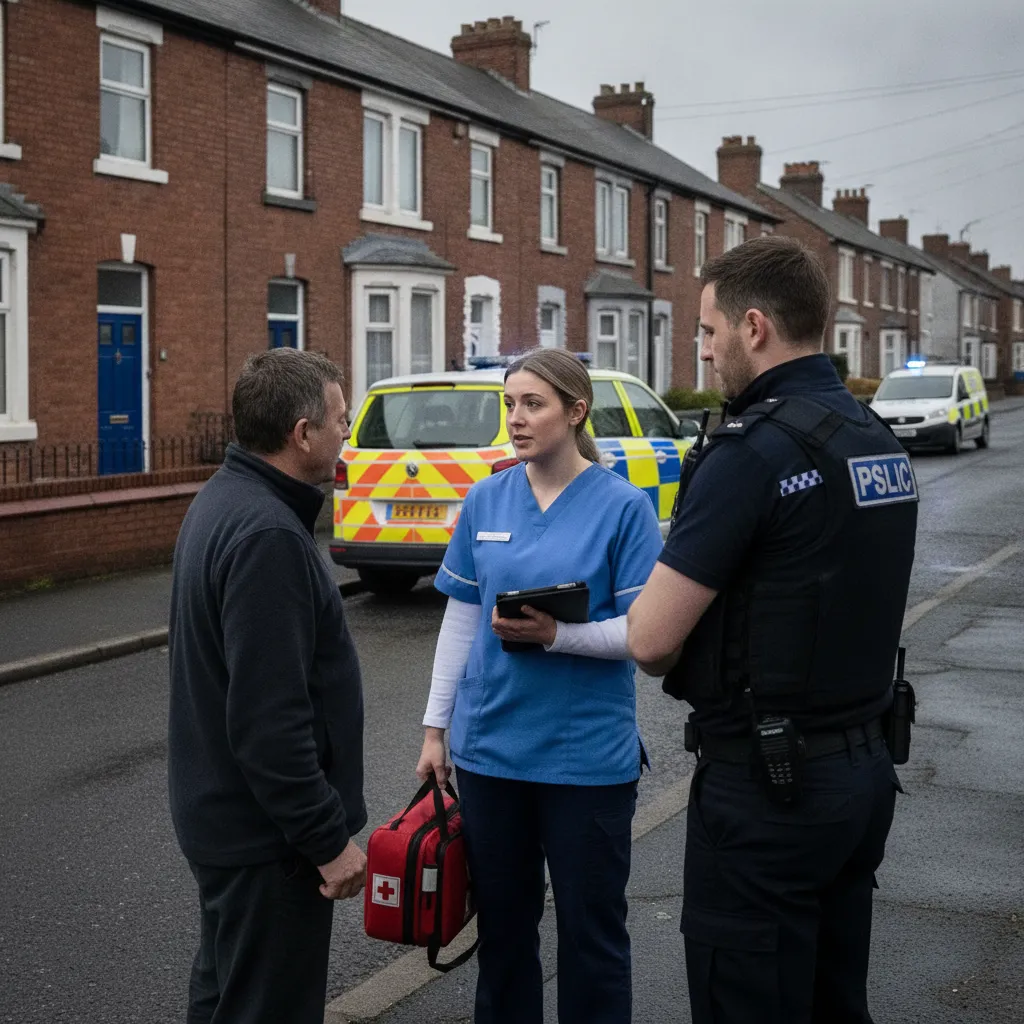
The Police Service of Northern Ireland is implementing a fundamental change in how it handles mental health emergencies, shifting away from acting as the primary responders for non criminal welfare checks. Starting in November, officers will no longer automatically attend calls regarding someone’s wellbeing unless there is an immediate risk to life, a threat of harm, or evidence that a crime has been committed. While the public should continue to dial 999 during an emergency, dispatchers will now triage these calls more strictly and may redirect them toward health and social care professionals instead of sending a patrol car.
The initiative, known as Right Care Right Person, aims to move people away from law enforcement interventions when medical expertise is what is actually required. According to the PSNI, the force manages roughly 30,000 mental health related calls annually, yet only about three percent of those incidents involve actual criminal activity. Supporters of the move argue that seeing a uniformed officer can be intimidating or even escalate a crisis for someone experiencing a psychological break, suggesting that clinical specialists are far better equipped to provide the necessary stability and care.
Despite the logic behind the transition, many within the healthcare sector are sounding alarms over whether the system can handle the extra pressure. Dr Ross Irvine of the Royal College of Psychiatrists warned that mental health services in Northern Ireland are already at a breaking point, noting that nearly thirty percent of positions across the province remain vacant. There are fears that removing the police safety net without first increasing funding and staffing for social services could leave vulnerable people in limbo, simply shifting a burden from one overwhelmed agency to another.
Advocates for the change maintain that while funding gaps are a serious issue, it is essential to stop using police officers as default mental health workers. Professor Siobhan O’Neill described the shift as an important step forward but echoed concerns regarding the lack of investment in regional crisis intervention services. As Northern Ireland rolls out this phased approach, officials insist it will lead to more consistent decision making and ensure that citizens receive specialized medical attention rather than a legal response during their most fragile moments.
