
Photographs by Dana Golan
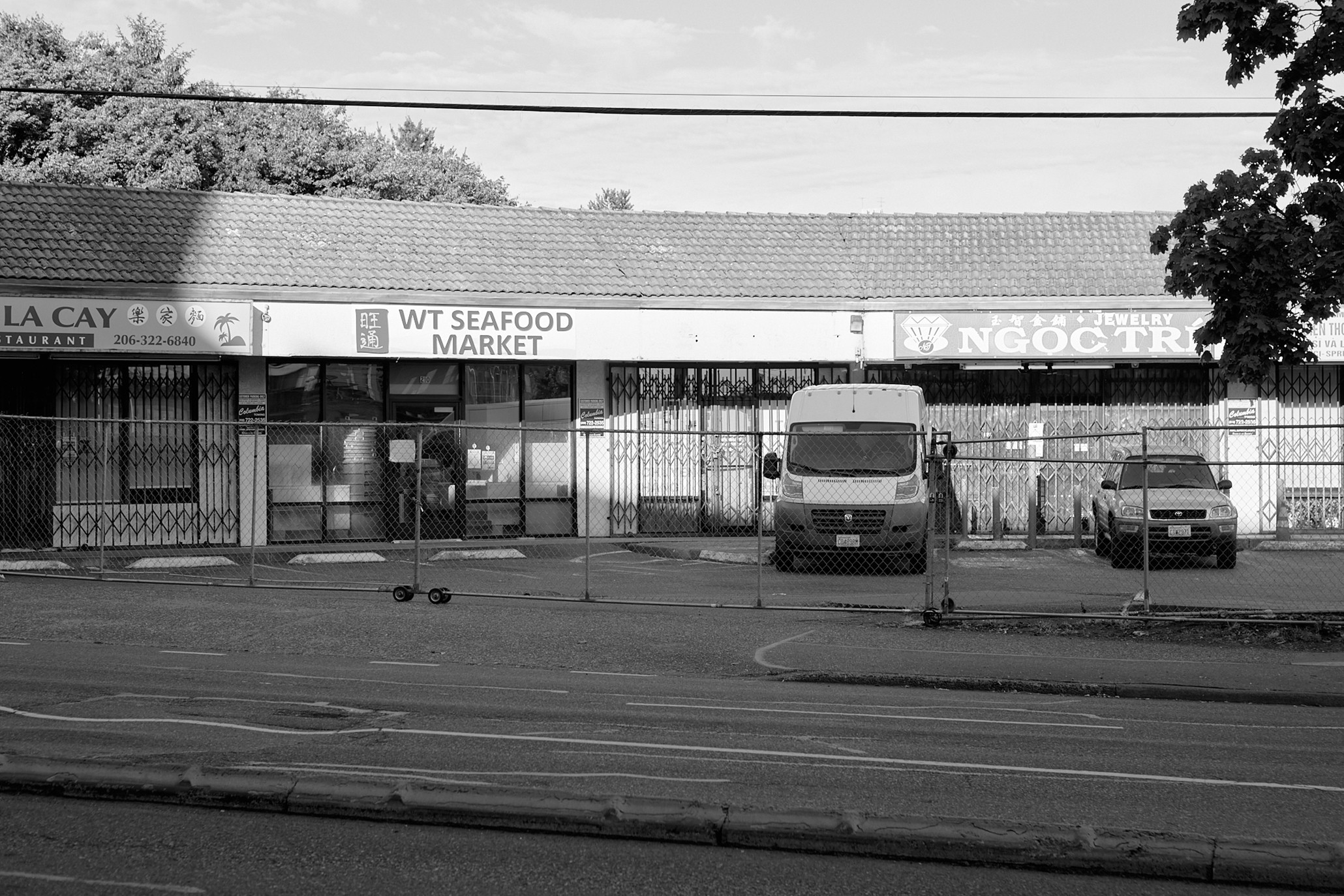
Late last year, I walked roughly a mile from downtown Seattle to the working-class neighborhood of Little Saigon and came upon a montage of human despair. An open-air drug market stretched along the intersection of 12th and Jackson: about 250 people, many smoking fentanyl or bent over in the thrall of the drug, tilting as if mid-fall. Three women lay passed out on the sidewalk, their chests slowly rising and falling, while fellow addicts stepped over them and dealers made sales. Young boys, schoolbags on their backs, stood on a far corner and watched.
I walked around the block to the Hoa Mai playground, named for a Vietnamese flower that signifies rebirth. City workers had installed gates to keep drug users away, but at 4 p.m. on a Wednesday, I counted 27 people smoking drugs and nodding off. No children were in sight.
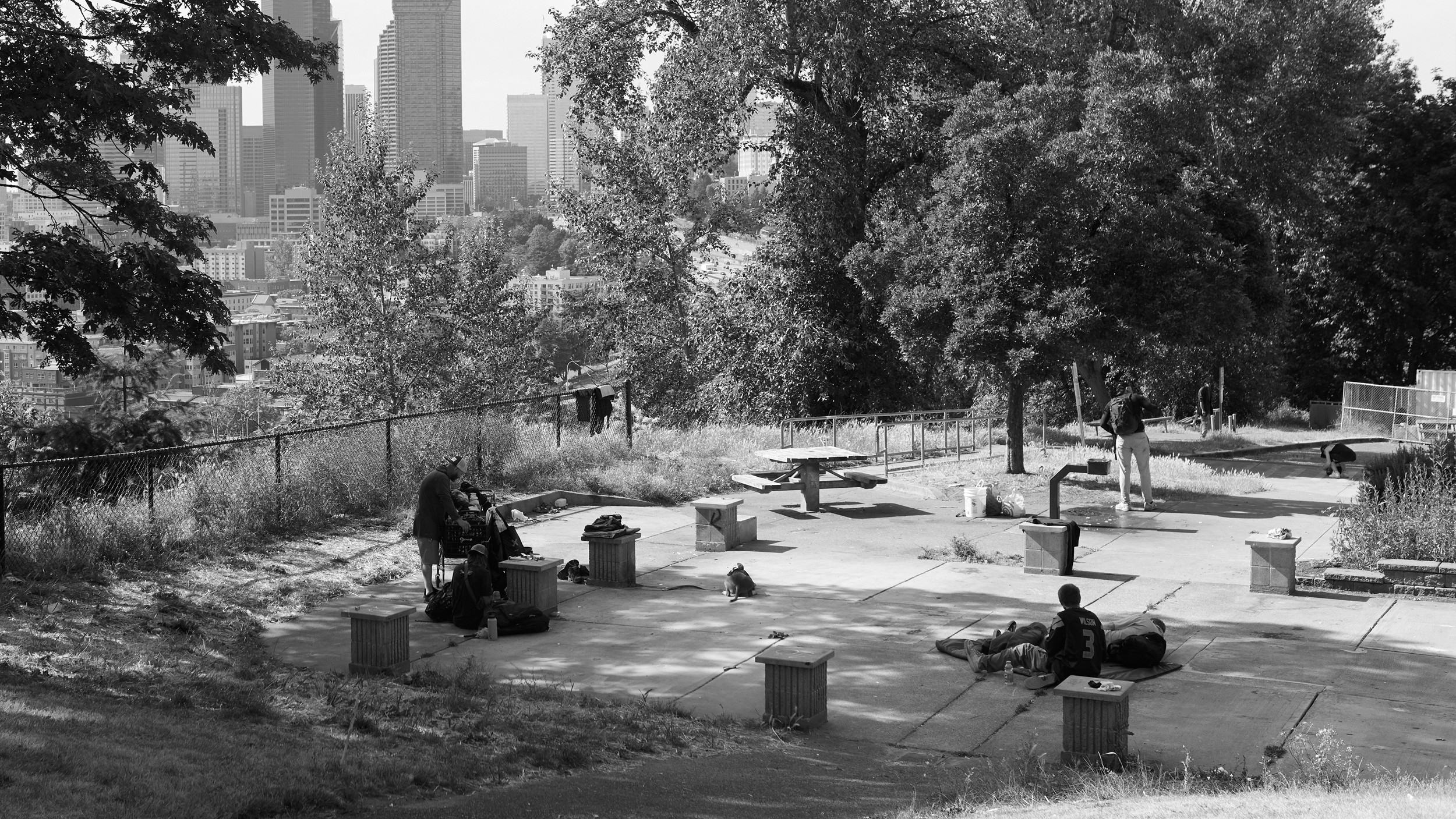
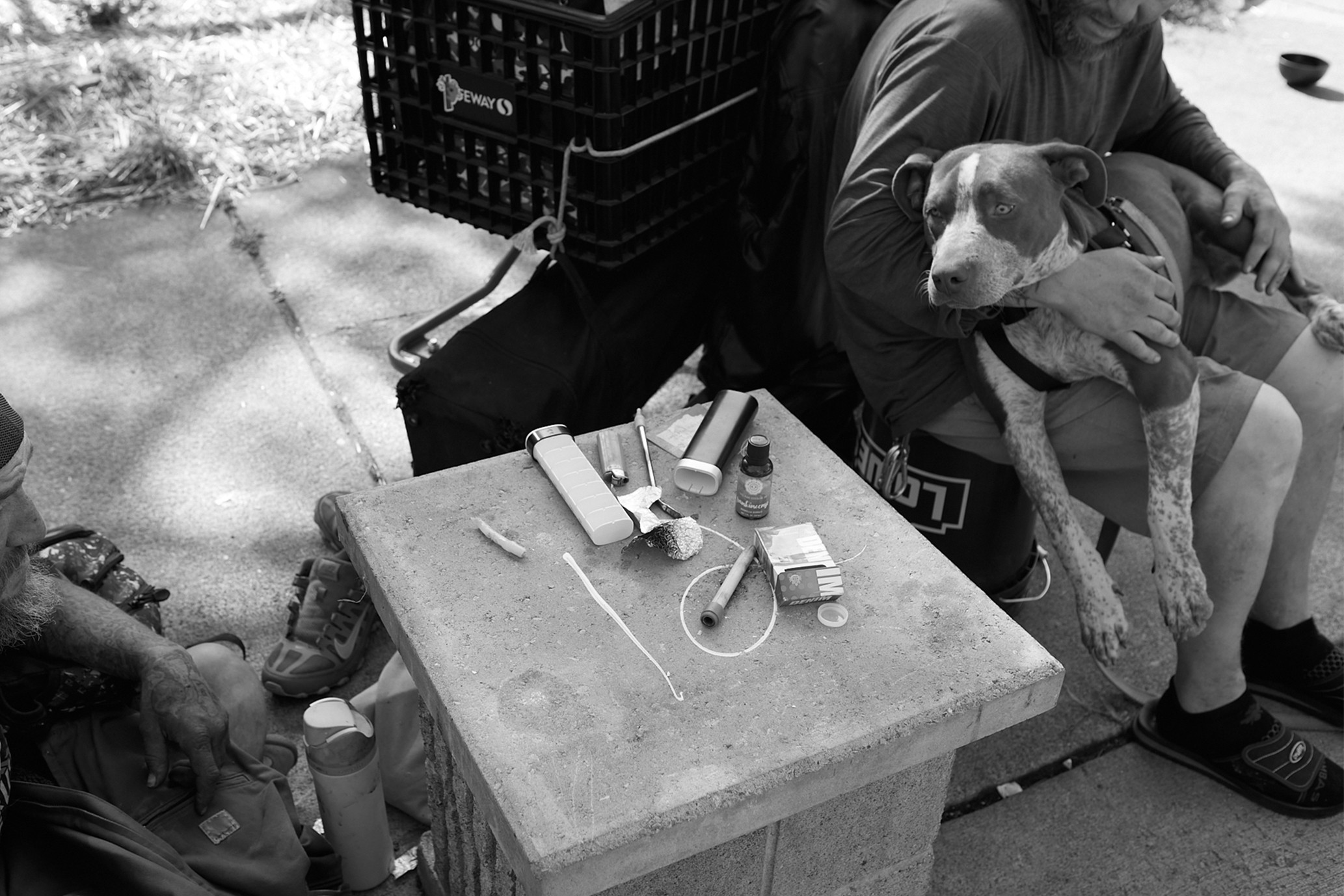
Half a mile to the south, in the Beacon Hill neighborhood, I visited a 10-acre park named after the Filipino nationalist Jose Rizal. It has a playground and the remnants of an apple orchard, and at night you can peer downtown and see the city lights. As I arrived, a drug user squatted next to a child’s slide and relieved himself. Others had set up tents and colonized the park pavilion, where they heated fentanyl on tinfoil and inhaled the fumes with glass pipes. A few went old-school and injected it.
Across the street, I spoke with Angelina Monsegur as she waited at a bus stop. When she was a kid, she told me, she and her father ate candied apples in the park and watched Fourth of July fireworks. A few weeks earlier, she and her 6-year-old daughter had gotten on the bus and seen a man smoking fentanyl on board. “Are you serious?” she’d shouted at him. “My daughter has asthma.” I asked if she had called the police, and she smiled at my naivete. “All the city does is send out teams who hand out aluminum foil and fentanyl pipes.”
Seattle is one of the wealthiest and best-educated cities in the world. It can afford to try various strategies to address its drug epidemic and high rate of fatal overdoses. Yet many of the city’s leaders, apparently supported by voters, view enforcing bans on the open sale and use of narcotics, and forcing addicts off the streets and into treatment, as akin to an act of state repression.
Seattle, like a striking number of other liberal American cities, has embraced a radical form of “harm reduction,” which is more a philosophy about treating addiction than a scientific approach to it. Harm reduction’s adherents hold that police and outreach workers should “meet the addicted where they are,” which is to say without judgment. The New York State Department of Health, a bastion of harm reduction, describes it as a “social movement” committed to “building leadership” among drug users. In these places, de facto and sometimes legal restrictions on narcotics use have been greatly loosened; cities fund teams of workers to hand out drug paraphernalia, and in some rare cases they’ve created dedicated spaces for addicts to shoot up. Meanwhile, police departments struggling with staffing shortages and budget cuts have stopped devoting resources to sweeping users and dealers off the streets or out of parks and playgrounds.
Harm reduction was born 50 years ago of an admirable humanitarian impulse. Its most basic ideas, such as providing clean needles to users, deservedly draw broad support. There’s a debate to be had, though, about whether this approach has saved lives or added to the carnage of America’s terrible drug epidemic. From 2014 to 2024, roughly 862,000 Americans died of drug overdoses, more than twice the toll of the previous decade. Several studies have shown that addicts who shoot up at official injection sites are far less likely to die of overdoses than those who use drugs in, say, alleyways and parks. Over the past decade, however, overdose-death rates climbed sharply in nearly every city where the strongest harm-reduction policies were in place, and even with declines in the past two years, the rates remain well above those of previous decades. From 2016 to 2025, 7,089 people died of overdoses in King County, which includes Seattle—seven times the number of homicides in that period.
Harm reduction isn’t just a problem for addicts. In many cities, the autonomy of drug users has taken precedence over nearly everything and everyone else, not least working-class families like Monsegur’s who must live alongside addicts and accept dystopian decay. Keith Humphreys, a Stanford psychiatry and behavioral-sciences professor and a former adviser to President Obama, supports needle exchanges and opposes the widespread jailing of users. But when he argues that drug policy must take into account the impact on communities, he told me, some critics dismiss him as a reactionary. Their arguments, he said, “sound a lot more like gun rights and vaccine refusal. It’s no longer about the whole population; it’s about the subset who use drugs.”
In recent years, officials in cities such as San Francisco and Philadelphia have moved to rein in the excesses of harm-reduction policies. Nevertheless, these policies retain a powerful hold on public-health and political leaders in blue parts of the country. I witnessed this in visits to Seattle and Burlington, Vermont—two of America’s more progressive cities. Both are afflicted by high overdose rates, overwhelmed police forces, parks and public squares often captive to drug use, and the theft and disorder that accompany all of that. Yet many of their elected officials continue to insist, despite everything, that harm reduction is the most effective and moral solution to addiction.
Harm reduction took root in the 1970s in the Netherlands, where addicts formed unions—the Junkiebond in Rotterdam, for instance—that distributed needles and pushed back against official insistence on abstinence from hard drugs. Not long afterward, this philosophy gained support in some American and Canadian cities. I first encountered it when I reported on a heroin-shooting gallery in Bushwick, Brooklyn, in 1991. The work of harm-reduction advocates at the time undoubtedly saved lives. HIV-infection rates for drug users in Bushwick had reached 50 percent or higher, at a time when that diagnosis was close to a death sentence. Activists risked arrest to distribute clean needles and bleach to disinfect used ones. But some began to argue for a more radical step: There would be less death, they said, if addicts could inject drugs without fear of arrest.
That momentous step came about not in New York but in Vancouver, a city whose political culture was left-wing and libertarian, celebrating the rights of the individual. In 2003, as overdose deaths surged, the Liberal Party of Canada carved out an exemption to federal drug laws and established North America’s first sanctioned injection site, in Vancouver’s Downtown Eastside, a troubled dockside neighborhood. Addicts could bring their heroin and cocaine to a 13-seat center where staff dispensed needles, swabs, and sterile water to cook the drugs and offered advice on vein maintenance. Clinic staff were trained to reverse overdoses, and if that failed, to call a hospital for help.
Initial opinion surveys found broad public support for the center, and it shone like a beacon for some activists, academics, and journalists in the United States and other parts of Canada. A stream of studies and articles celebrated Vancouver’s legal shooting gallery, which resulted in fewer cases of AIDS and other infections, and fewer deaths. Public-health officials coined a nonjudgmental nomenclature that persists to this day. The word addict was stigmatizing; better to refer to people who use drugs. People used rather than abused narcotics. They did not fail a drug test ; they tested positive.
Vancouver’s model spawned dozens of injection sites across Canada. Health officials in British Columbia went still further, championing a program known as “safer supply”: Former government officials started companies that provided addicts with free opioid alternatives such as pharmaceutical-grade hydromorphone pills—considerably more powerful than heroin. Drug users obtained these pills from pharmacies and specially designed vending machines.
By 2020, the rights of addicts in the province had edged toward the fantastical. In 2023, the province decriminalized small amounts of certain hard drugs. One hospital instructed nurses not to confiscate fentanyl or meth from patients and not to restrict suspected dealers from visiting patients. When British Columbia banned illicit-drug use within 50 feet of a public park, playground, or swimming pool, the provincial supreme court blocked the law, ruling that it could cause “irreparable harm” to drug users. “Harm reductionists had the force of a bulldozer,” Julian Somers, who studies addiction at Simon Fraser University, told me.
Some addicts learned to game the system by obtaining daily allotments of hydromorphone pills—15 or more a day was typical—and then selling them to dealers in exchange for stronger fentanyl concoctions. Dealers could then sell the original pills on the street. An investigation by the National Post reported a price drop of 70 percent or more for black-market pills in cities that had instituted safer supply. This, in turn, expanded the circle of the addicted and led to more overdoses.
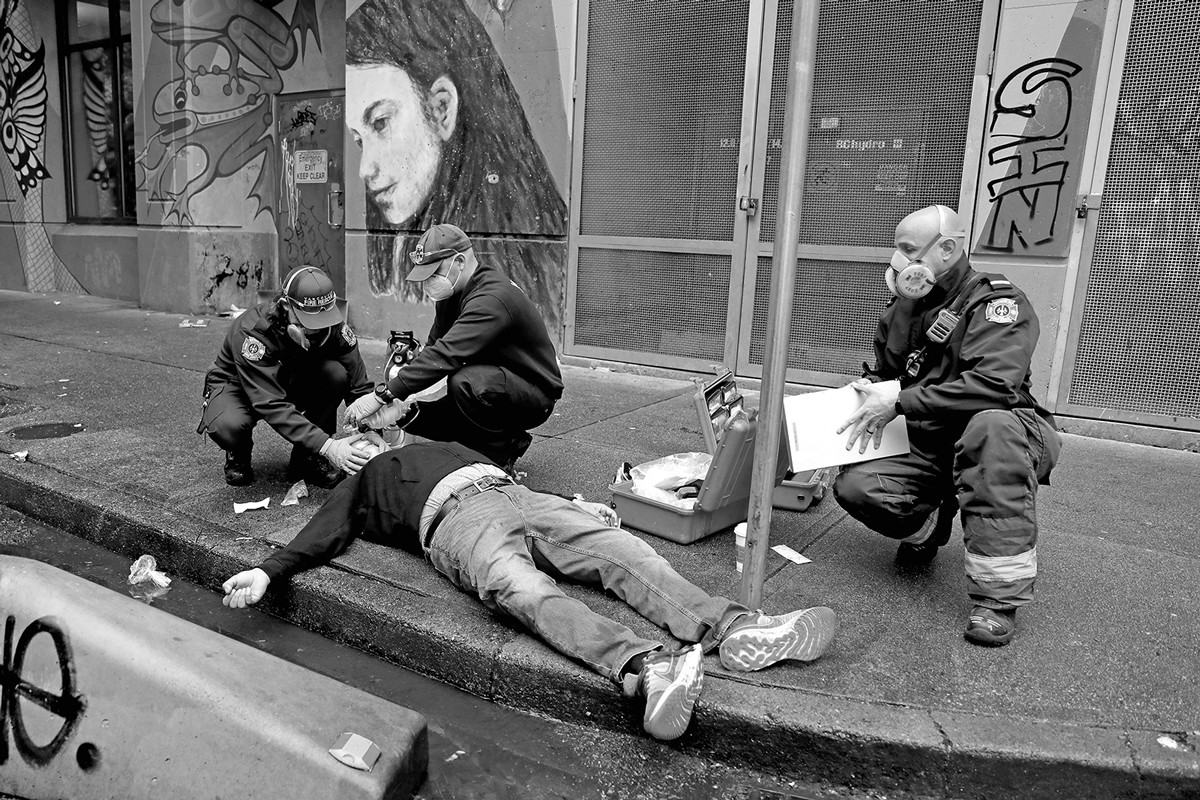
The consequences were predictable. Over the course of two decades, many thousands of drug users poured into the Downtown Eastside and other Canadian neighborhoods in search of narcotics and places to shoot up. Overdoses spiked. In 2014, British Columbia recorded 369 overdose deaths; in 2023, the figure peaked at more than 2,500. Fatal overdoses last year decreased to 1,826, as Canada moved to reverse decriminalization and tighten regulation of narcotics, but that still represents a nearly ninefold increase over 15 years. Advocates of harm reduction have long held that more addicts would die if officials closed injection centers. But a recent study found that after an injection site in Alberta closed, there was no increase in the number of overdose deaths, and more addicts sought treatment. Advocates have also insisted that crime does not spike near injection centers, but the data are more mixed than they admit.
Not long ago, I walked through a park in Toronto to a fence with hundreds of purple ribbons tied to it. Each represented a resident who had died of an overdose, and I was unavoidably moved. Then, as I read a leaflet, I realized that the memorial was the work of the Harm Reduction Advocacy Collective, “a liberation movement of people who use drugs,” along with public-health professionals and academics who “stand up for the rights of drug users.” It’s one of a number of similar groups in Canada, such as the Substance Use Health Network, which condemns “anti-euphoria prohibitionist principles” such as “the idea that illicit drugs are inherently bad.”
British Columbia is starting to rethink its runaway experiment. In 2025, the province began requiring addicts using the safer-supply program to consume their prescribed narcotics in front of pharmacists, and earlier this year, the drug-decriminalization program expired. Provincial health authorities are now making attempts to encourage addicts to get treatment. The sense is of a political culture reluctantly shaking off a decades-long stupor. In 2024, the premier of British Columbia appointed Daniel Vigo, a psychiatrist and public-health researcher, as the province’s chief scientific adviser on toxic drugs. Vigo has spoken of the terrible toll that repeat overdoses take on addicts’ brains, and has advocated for a new policy of mandating treatment for some addicts. Progressive activists and journalists tend to talk about forced treatment as a conservative-driven return to a carceral state, but considerable data show that addicts who enter mandated treatment are as likely to avoid drug use and rearrest as the relatively small number who seek treatment voluntarily.
Vigo’s words today would have amounted to heresy a few years ago. “It’s as if we forgot that the goal was to try and stop people from getting addicted,” he told me, adding later: “Harm reduction gets people in trouble when it stops being one part of a holistic strategy and it becomes an ideological movement.”
But even as Vancouver has begun the painful process of revising its harm-reduction policies, the city still exerts a powerful hold on the imagination of liberal leaders in the United States. In New York City, which established two injection sites in 2021, health officials and academics point to the perceived success of Vancouver as inspiration. Rhode Island, where an injection center opened in Providence in 2024, also holds up Vancouver as a model. The Washington State legislature appointed a working group that in 2025 recommended establishing a safe supply of narcotics for addicts, and officials repeatedly cited the Vancouver program.
The shadow cast by Vancouver extends to Burlington. Last year, the city council approved the establishment of an injection center. The group that the city chose to run it noted that Vancouver “remains the source of much of the evidence” showing the benefits of such spaces for drug users and the community.
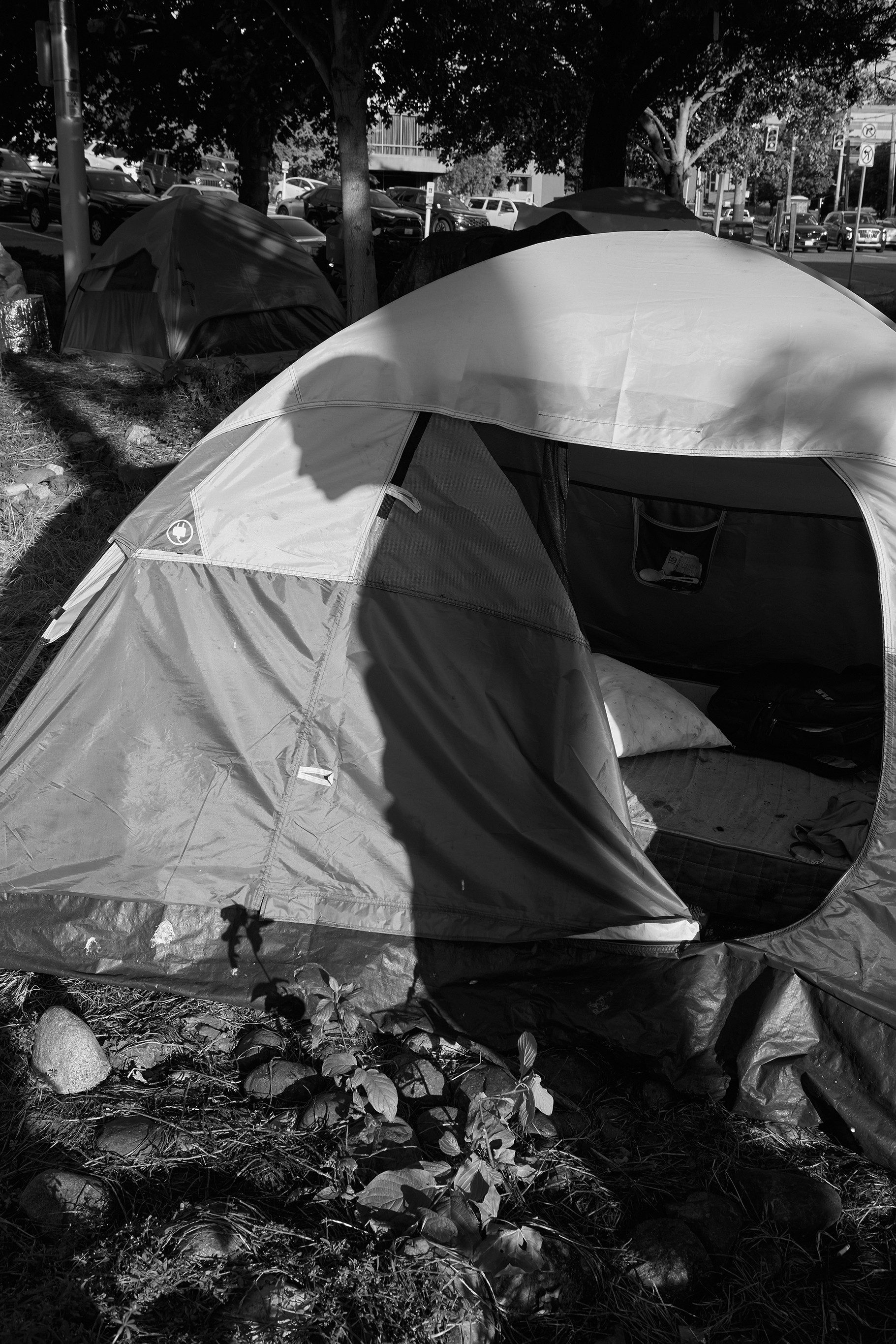
Burlington sits on Lake Champlain, the Adirondack Mountains rising on the far shore. It’s a beautiful city, but its drug scene is not covert, spreading over downtown and several other neighborhoods. Users pitch tents in churchyards and parks and along the waterfront. When I sat in City Hall Park last September, I counted at least 70 users and dealers, many looking hyperkinetic in the way of the strung out. I walked through an alley next to city hall where, a few weeks earlier, a group of young people had allegedly beaten a man to death in an argument over drugs.
Vermont has strict laws against possession of heroin and cocaine, but users in Burlington are rarely arrested or prosecuted for possessing small amounts. Although it’s hard to isolate the effects of these policies, in 2024, the city of almost 45,000 recorded 585 drug overdoses, 28 of which were fatal. That is more than twice the rate of fatal overdoses per capita in New York City the same year.
Beth Sightler walked me around her working-class neighborhood in the Old North End. Burlington’s progressive political culture and tradition of caring for the poor are well established; Bernie Sanders served four terms as mayor in the 1980s. Sightler, a liberal who runs a mental-health center, said she has fished needles out of her flower boxes and seen people overdosing in cars and cemeteries. She carries naloxone, a medication that can reverse an opioid overdose, when she walks her dog. One morning she saw a young woman on the grass near her porch wearing underwear, a bra, and sandals. “There was this beautiful woman, absolutely beautiful, sitting there trying to find a vein and inject,” Sightler recalled. “I told her, ‘Sweetie, you gotta move along.’”
Many people in Burlington offer similar stories. A block from City Hall Park, the King Street Center provides tutoring and recreation programs for families living in poverty. Staff members arrive early to sweep up needles outside the building. When drug dealers began playing dice out front last summer, Shabnam Nolan, the executive director, called the police, who eventually chased the dealers away. “We’ve tried to sound the alarm, and yet people are not taking us seriously enough about what’s happening,” Nolan told me. Why does a drug user’s “right to ‘dignity’ violate children’s right to come to our center without seeing blood and needles?”
“It’s as if,” she said of Burlington and its culture, “we are frozen with fear that someone might see us as uncompassionate.”
The city’s political class has compounded these problems. In 2020, activists launched a campaign to defund the police department, although it was regarded as relatively progressive and community-oriented. The city council cut almost $1 million from the police budget. Six years ago, Burlington had about 100 officers; now it has fewer than 70. The current city-council president, Ben Traverse, a liberal Democrat who has grown uncomfortable with Burlington’s direction, told me that sometimes as few as five officers are on duty citywide after midnight on the weekends. It used to be that if you wanted to deal drugs, “you did not come to Burlington,” Traverse said. But that’s changed: “Open-air drug sales are a common occurrence here.”
State’s Attorney Sarah George, the prosecutor for the county that includes Burlington, is a progressive Democrat who once wrote that the American legal system “was built on the oppression and caging of black, brown, and poor people.” She told me that the combination of COVID, ever less affordable housing, and a cascade of evictions fed a drug crisis that has devastated Vermont. But she doesn’t blame addicts, who she said are “rarely dangerous” and are suffering. “I’m very frustrated with this narrative that City Hall Park is the end of the world,” George added. “That park is still a very safe place to be.”
I asked her how Burlington might balance drug users’ sometimes dominant presence in the city’s parks and streets with the desire of residents to use and enjoy those same places. The city, she replied, should start by opening its planned injection center so that addicts can use drugs in private. The state legislature has allocated about $2 million that it obtained from a national opioid settlement to help fund the center, though potential neighbors have pushed back against the sites that have been floated so far. More broadly, George opposes pushing addicts to the margins. “They cannot be disappeared,” she said. “They are part of our community.”
In 2022, George announced a new policy: If police officers stopped cars with broken taillights, tinted windows, or expired licenses and found a cache of narcotics, her office would most likely decline to prosecute the cases, on the grounds that racial discrimination could have motivated the traffic stops. She emphasized to me that police officers could in any case confiscate and destroy the drugs. But she questioned the need to go beyond that. “Is prosecution needed?” she said. “Or have we done enough already?” George has been reelected twice and is running for a third term.
In April, I spoke with Burlington’s mayor, Emma Mulvaney-Stanak, of the Vermont Progressive Party, which has governed the city for much of the past four decades. She has seen firsthand the effects of the drug epidemic. When she lived in the Old North End and her child was a toddler, they awoke to drug dealers beating on their door. She told me that she supports police and Drug Enforcement Administration investigations that target dealers, although she noted the “whack-a-mole” nature of that work, as new dealers replace those who are arrested. She said that without more help from the county and state, the city lacks the funds to build larger shelters that could help keep addicts off the streets. She is aware that Burlingtonians have grown impatient living with a drug-abuse epidemic. “We are fatigued with our compassion,” she told me. “All of the attention on harm reduction and public health—I get that.”
But, like George, Mulvaney-Stanak has not backed away from harm-reduction policies that she sees as humane and essential. Last summer, she opposed a city-council resolution calling for police officers to be stationed in City Hall Park to clear out users and dealers, arguing that the drug traffic would only go elsewhere and that there were not enough officers to enforce the policy. She signed off on the resolution, but she shares George’s philosophical objections: “Displacement and removal of people is not the solution,” the mayor said.
Wouldn’t an injection center, I asked her, draw more addicts and dealers to Burlington? She acknowledged the possibility, but framed it as a necessary risk. She repeated the harm-reduction maxim: “It helps people where they are at.” The city’s problems, Mulvaney-Stanak insisted, were more image than reality: “People need to ignore the clickbaity articles that distort the nature of Burlington.”
Recently, Traverse and other Democrats on the city council have begun to challenge the mayor on harm reduction. Jennifer Morrison, the state’s public-safety commissioner, has also spoken up. She served as Burlington’s interim police chief for six months in 2020 before quitting, in part because of what she described as the city’s “mismanagement” and “social activism.” She and Governor Phil Scott, a moderate Republican, have clashed with Mulvaney-Stanak. They have periodically, at the city’s request, sent state troopers to Burlington to help local police with drug enforcement and patrolling the central business district. “I lived through the decisions that got us to the place that we are now,” Morrison told me. “We are exposing our youth to terrible consequences by normalizing drug use and addiction.”
The business community in Burlington has also pushed back. In more than a dozen interviews, local merchants spoke of feeling abandoned. In testimony before the state legislature, the owner of Outdoor Gear Exchange reported that in 2024, the business lost an estimated $400,000 to shoplifting, as addicts stole to support their habit. At Homeport, a 40-year-old home-furnishings store downtown, a co-owner, Mark Bouchett, told me that he lost $95,000 to shoplifting in 2024 and was forced to hire a security guard. Drug users defecate in the doorways of businesses.
Bouchett joined 170 other business owners and restaurateurs who last year wrote an open letter to the mayor warning that the city was in crisis. Their tone was reasonable; they sought treatment for addicts, not incarceration. But a broad coalition of the political left in Burlington—unions, harm-reduction groups, pro-Palestine and trans-rights activist groups, and the local chapter of the Democratic Socialists of America—countered with their own letter, in which they denounced the business owners and demanded that they open bathrooms and sheltered doorways to addicts. To call for more police to help address the city’s drug problem, this group wrote, would “further harm our most vulnerable community members.” One of the signatories, Food Not Cops Burlington, posted and then deleted a boycott map targeting the business owners.
Overdose deaths in Vermont dropped last year to 170, a 37 percent decrease from the peak in 2022, but still far above the 78 deaths recorded in 2010. At the Ben & Jerry’s on Church Street, I saw staff hand out cards to customers who asked to use the bathroom: “Vermont is experiencing a tragic increase in overdose fatalities. Our bathroom has also become a destination for folks seeking to inject drugs.” The bathroom was permanently locked.
Families and children speak of being left on their own to navigate these harsh realities. Through the King Street Center, I met a young woman who was earning top grades at the University of Vermont. When she walks her younger sisters home from school, they pass drug dealers on the way. A Burlington High School student told me that her teachers have instructed students to avoid eye contact with dealers and users. A week earlier, she said, an addict had trailed her home after volleyball practice. She broke into a run, yelling for help, and the person eventually turned away.
Then there was Britany, a mother of three young children, who moved two years ago from a homeless shelter to an apartment on King Street. (She asked me not to use her last name, fearing for her family’s safety.) She said that she often found drug paraphernalia in the apartment building and, on some nights, encountered an addict sleeping in the hallway; her next-door neighbor was a fentanyl dealer. She had constructed a safe room for her children to flee to in case of gunfire. “Everyone talks about needle exchange and harm reduction,” she said. “I mean, okay. But it’s like my children and I are living in the zombie apocalypse.”
Just a few years ago, voters in Seattle seemed primed for a change. In 2021, they elected Ann Davison, a moderate and independent-minded Republican, as city attorney. Sara Nelson, a Democrat who had advertised her willingness to challenge the harm-reduction consensus, won a seat on the city council the same year and became its president two years later. With support from Davison, she passed laws cracking down on open drug use, prostitution, and dealing downtown, and substantially increasing the number of surveillance cameras in high-crime neighborhoods. Nelson persuaded the city council to redirect money to on-demand addiction treatment. “You can’t meet people where they’re at, because where they’re at is on death’s door,” she told me, adding that she believes many addicts can be saved only by a firm push toward treatment.
Nelson also asked pointed questions about what had become the received wisdom in Seattle, such as why the county government paid millions of dollars to supply kits to addicts with tinfoil, pipes, and instructions on how to smoke fentanyl. (Incongruously, these kits came emblazoned with an image of Martin Luther King Jr., the namesake of King County.) What harm was reduced, Nelson asked at a 2023 council hearing, by helping addicts get high? Amber Tejada, an employee of a health nonprofit that had partnered with the city, raised her hand to answer. “I know it can be a little controversial,” she told the councilwoman, “but one of the key tenets of harm reduction that I see is that we want to be able to facilitate and champion autonomy of people who use drugs.” Tejada added, “There are folks for whom abstinence is not something by which they measure their success in life.”
Nelson was no hard-line conservative. She pushed to expand the number of treatment beds for addicts and talked openly of her own past struggles with alcohol. But in elections last November, voters turned out both her and Davison. Their replacements had concerns over the use of surveillance cameras and opposed laws that barred repeat public drug users from certain areas in the city. I spoke with Davison in her office shortly before her term was up. She wrestled with her sense of a job not completed. “It’s really sad to watch the slow death of so many people,” she said, adding later, “You cannot act like this is a victimless crime.”
[Read: Crime in Chicago is a choice]
I asked Sandeep Kaushik, a Democratic political consultant who has lived in Seattle for decades, if he could explain the persistent attraction of radical harm-reduction policies in his city. Kaushik described himself as an “unreconstructed Obama Democrat,” which he noted “codes me as a conservative in some circles here.” He told me that local leaders “really believe the city should be on the leading edge of translating progressive ideas into policy.” There is also a curious disconnect between the policies that political leaders put in place and the desires of voters. In many polls, Seattle residents list crime and illegal drug use as among their greatest concerns, and a Seattle Times survey three years ago found that 60 percent of respondents wanted police to arrest those who used drugs in public places.
Last year, the city elected a new mayor, Katie Wilson, a self-described democratic socialist with no experience in elected office. Wilson has signaled an openness to pulling back some harm-reduction policies. Before she officially entered the race, she wrote an essay for Seattle’s alt-weekly, The Stranger, in which she cautioned fellow leftists against smugness. “The central weakness of the left narrative,” she wrote, “is a habit of deflection that makes it sound, at best, as though we are in denial about the grim reality on the streets.” The left, she continued, should not trivialize “what anyone who spends some time walking around Seattle’s streets can plainly observe: People with acute mental illness whose behavior is disturbed and occasionally aggressive. People using drugs, often incapacitated or passed out on the ground.”
Since she took office, Wilson has backed up her words by signing off on sweeps of large encampments in parks. Police and city workers have dismantled tents and carted away garbage. In late June, the mayor emerged from what she described in a statement as a period of “deep listening” and promised to “disrupt the drug dealing” and “public disorder” that plague the city’s Little Saigon and Beacon Hill neighborhoods. The police, she said, would commit more officers to those areas, and arrest users and dealers or press them to accept treatment. For a Seattle politician to argue that tolerating drug crime and disorder amounts to harm enhancement registered as something close to startling news.
Yet Wilson runs a political risk. By pledging to crack down, she has broken with many of her allies and supporters. Now she will be judged by her ability to clear the city’s streets. Andrea Suarez leads a group, We Heart Seattle, that combines care for the homeless with a hardheaded insistence on legal consequences and addiction treatment for drug users. She was in Jose Rizal Park when police swept it one day in April, and watched users and dealers amble off into the woods or walk over to Little Saigon. They returned a few hours later, she told me. A day or two after that, the tents reappeared. “Everyone who lives in this park knows there is no consequence for being swept multiple times or doing drugs or vandalizing a park,” Suarez said.
What’s baffling is that none of this lies beyond the ability of city officials to address. San Francisco Mayor Daniel Lurie has instructed police to crack down on dealers and dismantle tent cities. Philadelphia Mayor Cherelle Parker has sent officers into drug-scarred neighborhoods and established a treatment court, which offers first-time felony drug offenders a chance to avoid jail if they enter a treatment program. San Jose, California, has put more police officers in targeted neighborhoods, built emergency housing as police dismantle homeless encampments, and increased fines for landlords whose abandoned buildings are used by dealers to sell drugs and guns. In Boston, Mayor Michelle Wu was once enamored of harm reduction and injection centers. But she has ordered police to clear street encampments, and her administration now puts more emphasis on pushing addicts into treatment, by detaining them if necessary. Wu has also dropped all mention of injection centers from her plans.
In Seattle, by contrast, efforts to reduce public drug use force afflicted neighborhoods to pay a high price. For years, when playgrounds and parks became drug hot spots, the city reacted by fencing them off, depriving families of access. In May, police and city workers returned to Jose Rizal Park and again booted out dealers and addicts, preparing the park for a renovation. As a first step, city workers dismantled the picnic pavilion where addicts smoked and shot up, its condition having deteriorated from all the misuse. Park officials do not plan on replacing it, acknowledging the obvious in bureaucratese: The park “has been impacted by activities not aligned with intended use.” The bus shelter around the corner, where drug users gathered day and night, was also ripped out “because of an increase in loitering, littering and vandalism,” a King County Metro representative told me by email. All of this felt like another admission of defeat—officials destroying Seattle in the name of saving it.
This article appears in the September 2026 print edition with the headline “The Cities That Said Yes to Drugs.”
