
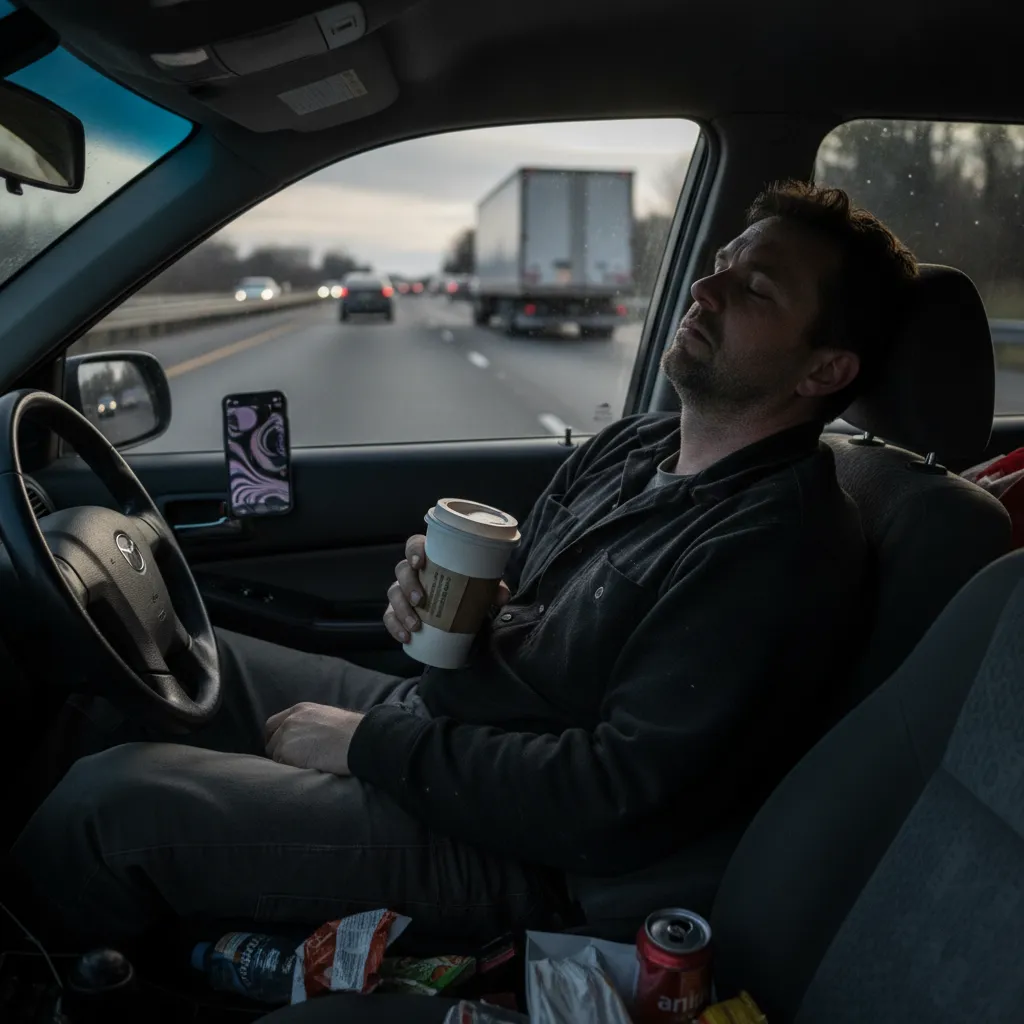
For millions of commuters, a large cup of coffee is the standard prerequisite for hitting the road. However, new survey data from the American Academy of Sleep Medicine suggests that relying on caffeine to fight fatigue is a dangerous gamble. Roughly 41 percent of adults admit they have been so sleepy while driving that it compromised their safety, yet many continue to rely on temporary fixes rather than proper rest.
The habits people use to stay awake are often ineffective illusions of alertness. While about 65 percent of surveyed drivers reach for caffeinated drinks and nearly 60 percent roll down their windows for a breeze, experts warn that these gestures do nothing to address the underlying cognitive impairment caused by exhaustion. Dr. Fariha Abbasi-Feinberg, president of the AASM, emphasizes that there is simply no substitute for actual sleep, noting that coffee provides only a fleeting boost and cannot replicate the restorative power needed for safe navigation.
The physical reality of drowsy driving is far more sinister than just occasional yawning. Drivers may experience microsleeps, which are sudden lapses in consciousness that can lead to total loss of vehicle control in seconds. Data from the AAA Foundation for Traffic Safety reveals a startling comparison: driving after only four hours of sleep creates a crash risk similar to driving with a blood alcohol level of 0.08, which is the legal limit for intoxication in many jurisdictions.
To combat this hidden epidemic, safety advocates suggest shifting focus toward prevention rather than mid-trip mitigation. Experts recommend ensuring at least seven hours of sleep before any major journey and avoiding solo drives during late-night or early-morning hours when biological urges to sleep are strongest. When tiredness becomes unavoidable during a trip, officials advise pulling over for a twenty to thirty minute nap, as this remains the only reliable way to restore mental clarity and ensure everyone reaches their destination safely.
