
At the beginning of November, Washington State announced that one of its residents had died from bird flu. The announcement had an air of déjà vu to it: Around this time last year, another person in Washington State died of a related form of the virus—the third bird-flu death in the U.S. and the last reported fatality from the illness in the country until now. Autumn is beginning to look more clearly like the start of bird-flu season for livestock, and, by extension, the time of year that the spillover risk to humans could be highest. The question now is whether these patterns will hold—whether the dramatic rise of the flu among wild species may ultimately contribute to a seasonal uptick among farmed animals, which in turn could cause more cases in people each autumn.
North America had never really been troubled by bird flu until a few years ago, when waterfowl traveling from Europe to Canada brought a new kind of the virus with them, one that was well adapted to migratory birds. Since then, the pathogen has infected more than 2,200 commercial and backyard poultry flocks in the United States, totaling more than 200 million birds, the government estimated in September. More than 70 human cases have been confirmed in the country, and many more have likely gone undetected. Most of those people—including all three who have died—seem to have gotten the disease from livestock.
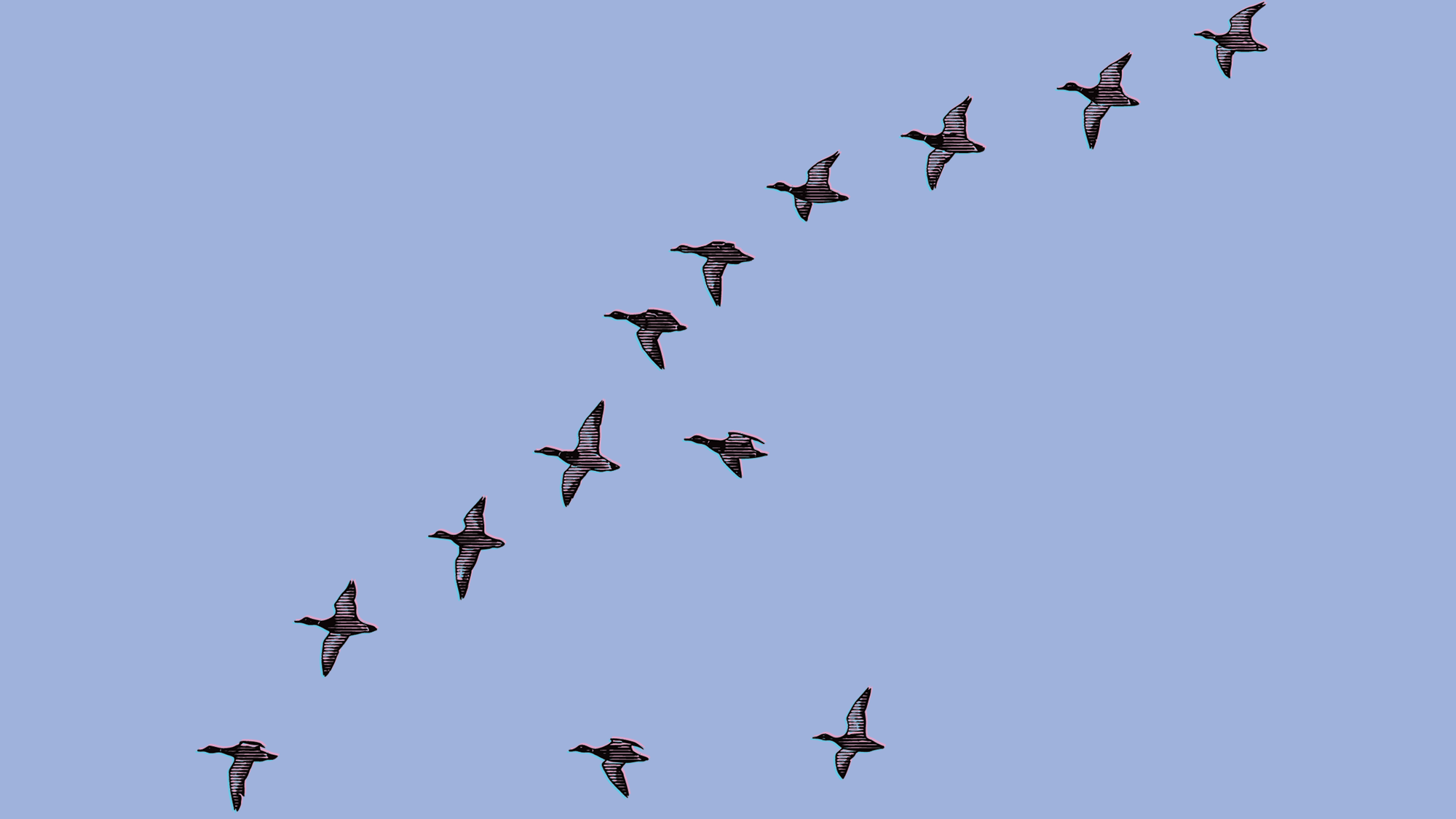
All the while, this highly pathogenic virus has been infecting more wild birds, and scientists have been trying to understand how. Over the past few years, they have identified changes in the virus that have made certain waterfowl, particularly mallard ducks, a bigger culprit than they once were in spreading bird flu across long distances. “There are some species of ducks that are like Typhoid Marys, moving the virus around the landscape,” Nichola Hill, a biologist at the University of Massachusetts at Boston who studies bird flu, told me.
A mallard carrying the virus might migrate, for example, from Alaska to San Francisco; once it lands there, the duck could infect a bird of another species, which could carry the disease farther south, Hill said. Ducks infected with the new variation of bird flu don’t always show signs of being ill or die as quickly compared with those that have other versions. And when the flu can last inside them for longer, the virus can develop new, potentially more dangerous mutations.
Scientists cannot yet fully predict when bird flu will peak each year, Louise Moncla, of the University of Pennsylvania School of Veterinary Medicine, wrote to me in an email. “However, since 2022, cases within wild birds tend to peak in the fall, and sometimes there is a secondary, smaller peak in February,” she noted. That pattern seems to correlate with the timing of migration of wild aquatic birds. Moreover, she added, spillovers of bird flu into farm animals “loosely track these trends.”
Cattle likely caught the virus from migrating birds, just as poultry did. “That was clearly a bunch of blackbirds and starlings that had been feeding on leftover grain or feed in the cattle lots,” Hill said. (Almost two decades ago, researchers were already wary of starlings, in particular, as potential bird-flu carriers.) It’s thought that infected birds left their droppings in the cows’ food, spreading the virus: Studies of less pathogenic kinds of avian flus have found that those viruses can remain infectious in the animals’ feces for at least seven months.
Moncla was quick to point out that other variables, such as biosecurity measures, can influence the likelihood that the virus will spread to—and among—farms. In the U.S., the disease has spread in a sustained way among cattle, but ramping up surveillance for bird flu along major migratory flyways, as well as putting stronger protections in place for farmworkers in these areas, might help scale back the risk of the virus. Some states already allow culling of non-native species of migratory starlings to reduce the risk of bird flu in cattle populations.
Public-health officials still stress that the risk of bird flu to the general population remains low. But it’s also part of our world in a way that just wasn’t true all that long ago. Previously, wild-bird populations would usually catch the virus in isolated instances from animal farms; only after a new strain emerged a decade ago did wild birds seem to start catching it so often from one another. Last year, 29 countries in Europe detected wild birds carrying the highly infectious pathogen, and the number of cases in captive and domestic birds was twelvefold the amount two years prior. The virus has now been detected in 230 wild-bird species within the United States.
Some human cases could come from direct exposure to the virus shed by wild birds, too. The virus isolated from the sole locally acquired human case in Canada most closely matched that of two dead wild geese. None of the 25 animals the previously healthy teenager had been exposed to, including household pets, tested positive. (The teenager became critically ill, but has since recovered.)
Ultimately, the greatest fear is that the bird-flu virus will mutate to spread easily from person to person. For now, though, the people who have to worry are livestock workers and, Hill said, duck hunters.
