
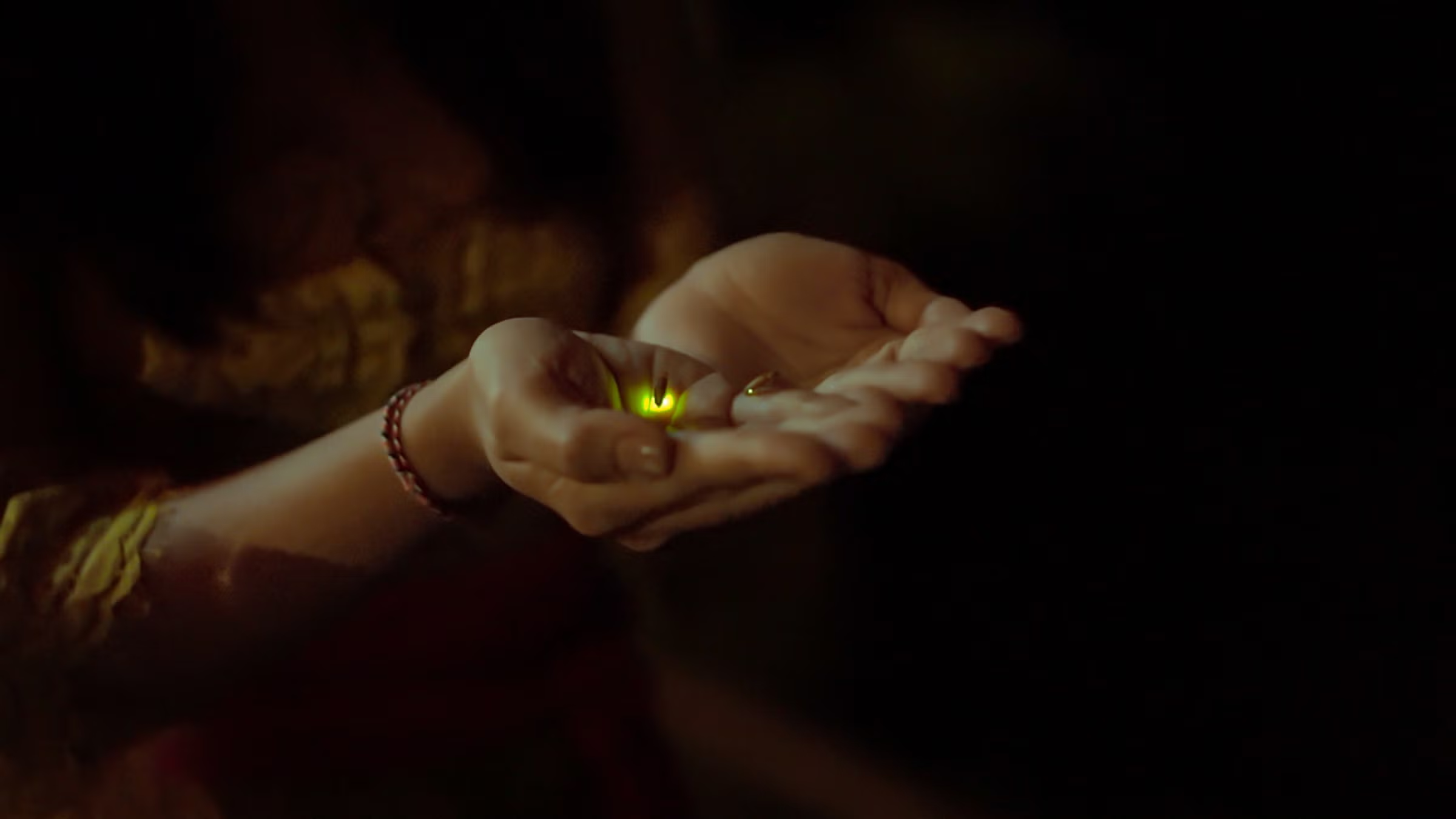
For Dr. Ingrid Yang, a board certified internist specializing in longevity, a trip to Indonesia revealed an unexpected connection between the natural world and human health. While visiting Taro Village in Bali, she met Wayan Wardika, a conservationist dedicated to saving local firefly populations. Wardika had grown up walking home from school along paths illuminated by these insects, but upon returning to his hometown after decades away, he found the luminous displays had vanished. His subsequent research highlighted a devastating reality: the rise of artificial light pollution is erasing the delicate communication systems fireflies rely on for survival.
The tragedy of the disappearing firefly lies in the fragility of bioluminescence. For these insects, light is a language used for courtship, where males flash to attract mates and females respond from their perches. This essential conversation requires darkness to function; once streetlamps and bright urban glows enter the equation, the signals are drowned out and reproduction fails. As Dr. Yang observed, this environmental crisis mirrors a biological struggle happening inside the human body. Our eyes contain specialized cells that monitor light levels to inform the brain’s master clock when it is time to release melatonin and prepare for rest.
Just as artificial light disrupts a firefly’s ability to mate, it scrambles our internal circadian rhythms. Modern humans live in environments that never truly go dark, flooding our senses with blue light from screens and overhead fixtures long after sunset. This constant illumination tricks the brain into believing it is still daytime, keeping cortisol levels high and delaying necessary sleep cycles. Recent medical data supports this concern, with studies linking brighter nights and dimmer days to increased risks of heart disease and type 2 diabetes, suggesting that our bodies remain biologically tethered to a planet that goes dark at sundown regardless of our technological advances.
Seeking a solution, Wardika began consulting on lighting designs for resorts near his village, ensuring fixtures remain warm and dim enough to avoid interfering with firefly signaling. Interestingly, while these adjustments were made primarily to protect an endangered insect species, they inadvertently create an environment conducive to human healing. By respecting the transition between day and night—a period known locally as Sandhya—we may find that protecting the flicker of a firefly is inextricably linked to restoring our own longevity and peace of mind.
