
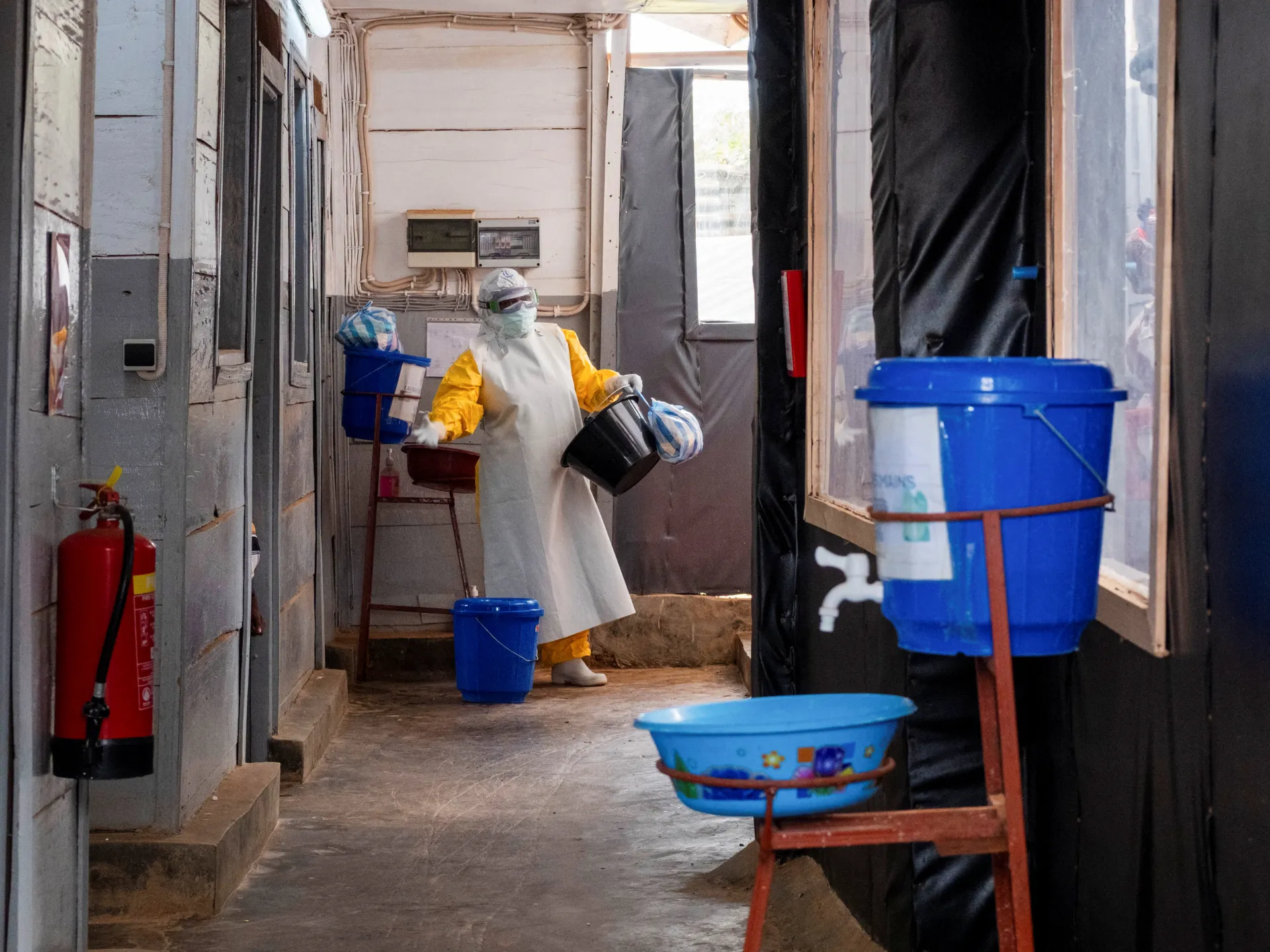
The battle against Ebola in the Democratic Republic of the Congo has entered a worrying new phase as the virus pushes into two additional health zones. According to the World Health Organization, new cases of the Bundibugyo strain have emerged in Bulu, located in the South Ubangi governorate near the Central African Republic border, and in Dungu, within the Haut Uele province bordering South Sudan. This expansion brings the total number of affected health zones to 63 across seven provinces, signaling a crisis that remains stubbornly out of control despite ongoing intervention efforts.
The scale of the tragedy is reflected in the grim statistics provided by health officials. As of late September, nearly 7,900 confirmed cases have been reported, resulting in approximately 3,800 deaths. With a fatality rate hovering near fifty percent, the situation is particularly dire in North Kivu, where mortality rates have climbed even higher. Medical professionals like Dr. Michel Paluku Mukuloli warn that fear is fueling the fire, noting that many patients avoid hospitals until it is too late because they believe these facilities are merely places to go and die.
Compounding the medical emergency is a complex security environment that hinders every aspect of the response. WHO Director General Tedros Adhanom Ghebreyesus explained that persistent conflict and mass population displacement make it nearly impossible for teams to reach isolated communities or accurately track those exposed to the virus. This gap is starkly evident in contact tracing numbers; while experts estimate there should be roughly 420,000 contacts based on current case counts, only about 30,000 people have actually been listed and monitored.
Adding to the difficulty is the specific nature of the Bundibugyo strain itself. Unlike other versions of Ebola previously seen in the region, there are currently no approved vaccines for this particular variant, though clinical trials are being accelerated. Furthermore, early symptoms can be mild and easily confused with common illnesses like malaria or typhoid fever, allowing infected individuals to move undetected through their communities before they become critically ill. For now, Ituri province remaines the epicenter of the disaster, but as soon as borders are crossed and trust erodes, health workers find themselves fighting an uphill battle against both a pathogen and a landscape of instability.
