
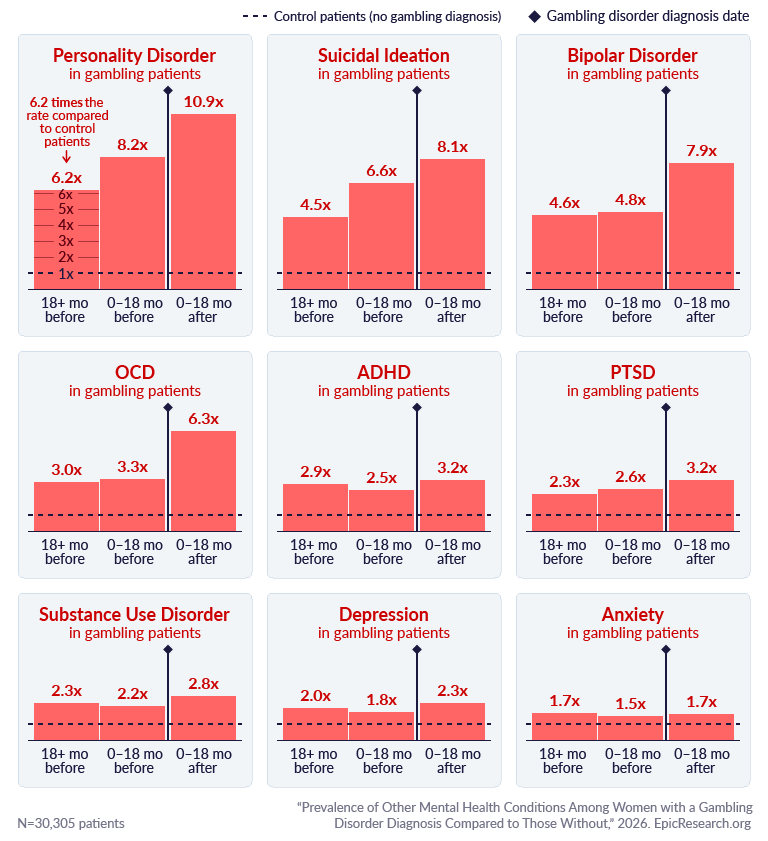
A sweeping new analysis of healthcare data suggests that gambling disorder rarely exists in a vacuum, instead appearing frequently alongside a wide array of other mental health struggles. According to a study conducted using the massive Cosmos dataset, patients diagnosed with gambling disorder show significantly higher rates of co occurring conditions like depression, anxiety, and substance abuse compared to those without the disorder. These findings come at a critical time as the legalization of sports betting and the rise of digital prediction markets have made high stakes wagering more accessible to the general public than ever before.
The researchers discovered a striking difference in how these comorbidities manifest between genders. For women, mental health challenges often preceded the gambling diagnosis. Data shows that more than 18 months before being diagnosed with a gambling disorder, roughly 62 percent of women had already been diagnosed with depression and 60 percent suffered from anxiety. Post diagnosis, these women also saw increased rates of personality disorders and suicidal ideation, suggesting that for many females, gambling may emerge amidst an existing landscape of psychological distress.
Men followed a different trajectory characterized by sharper spikes after their gambling diagnosis. While they generally entered the cycle with fewer pre existing conditions than women, their mental health declined more precipitously once the gambling disorder took hold. In the eighteen months following their diagnosis, men were far more likely to be newly diagnosed with depression and substance use disorders than their peers who did not struggle with gambling. This indicates that while women may carry a heavier initial burden, men experience a significant psychiatric crash linked closely to the onset of their addiction.
Ultimately, the study points toward a bidirectional relationship where gambling and mental illness feed into one another rather than one simply causing the other. Experts note that it remains unclear whether certain vulnerabilities lead people toward gambling or if the devastation caused by financial loss triggers clinical depression and anxiety. Regardless of the cause, the consistency of these patterns across various ages and social backgrounds underscores the need for integrated treatment plans that address both addictive behaviors and underlying psychiatric needs simultaneously.
