
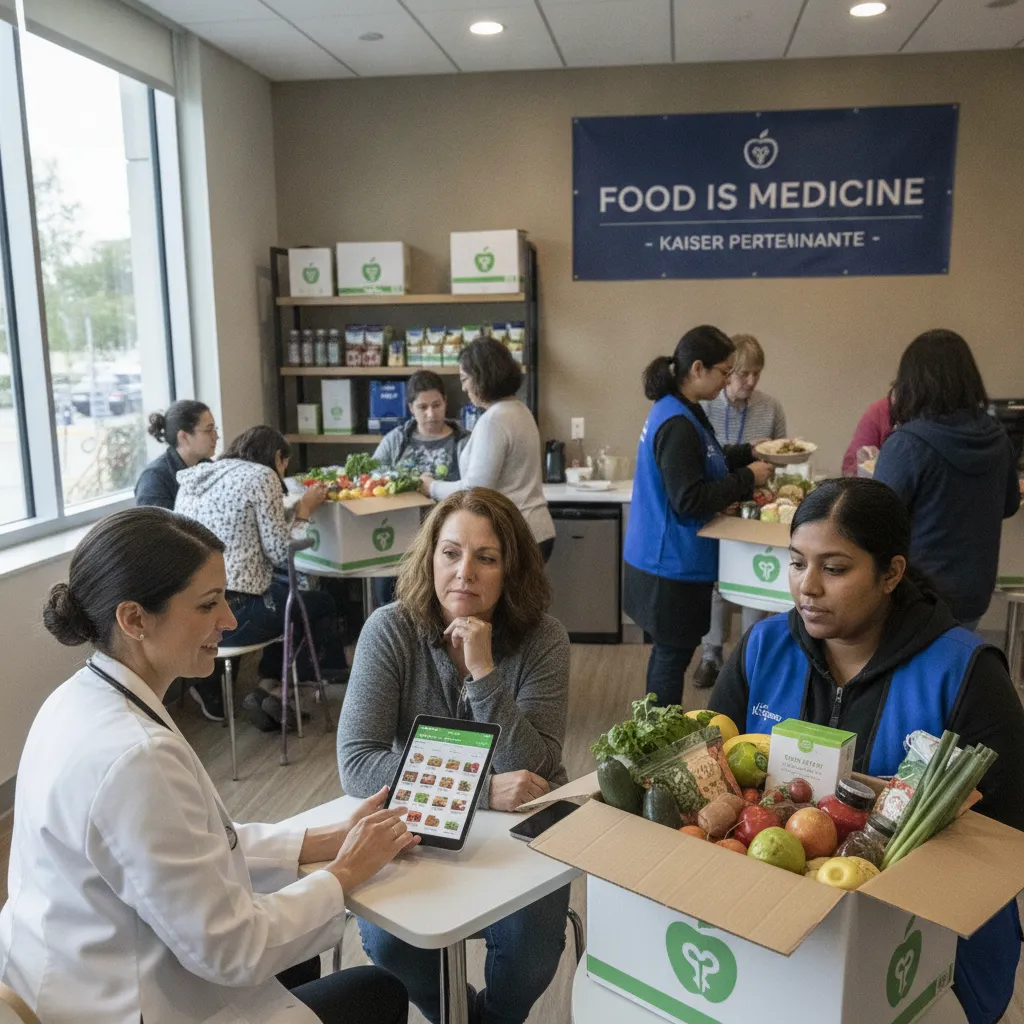
For Melanie Ross, the demands of being a full time caregiver for her sister often meant her own well being took a backseat. Between managing medications and scheduling endless appointments, maintaining her own battle with diabetes became an afterthought. It was only when her care team at Kaiser Permanente noticed her struggling blood sugar levels that she was introduced to a Food Is Medicine program designed to bridge the gap between medical advice and actual accessibility.
The initiative removes the common barriers of cost and transportation by providing paid healthy grocery deliveries alongside essential nutrition education. For Ross, the impact was immediate. Not only have her blood sugar levels dropped, but the mental burden of coordinating shopping trips has vanished. Having fresh produce arrive at her door allows her to plan balanced meals for both herself and her sister, serving as a constant reminder that she deserves care just as much as those who depend on her.
This individual success mirrors broader clinical findings. A recent study involving Medicaid patients with Type 2 diabetes revealed that those receiving weekly grocery deliveries saw significant improvements in their blood sugar compared to patients receiving standard care. Dr. Ericka Gibson notes that while food can function as medicine, it only works if it is affordable, understandable, and physically available to the patient. This philosophy treats nutrition not as a lifestyle choice, but as a critical component of preventative healthcare against heart disease and hypertension.
Kaiser Permanente is scaling this approach through a wider national movement aimed at treating disease through nourishment. By partnering with over seventy five food banks and offering medically tailored meals, the organization helped roughly eighty seven thousand people gain access to healthy foods in 2025 alone. By integrating these services directly into the healthcare system, providers are proving that some of the most effective prescriptions aren’t found in a pharmacy bottle, but in a grocery bag delivered straight to the home.
